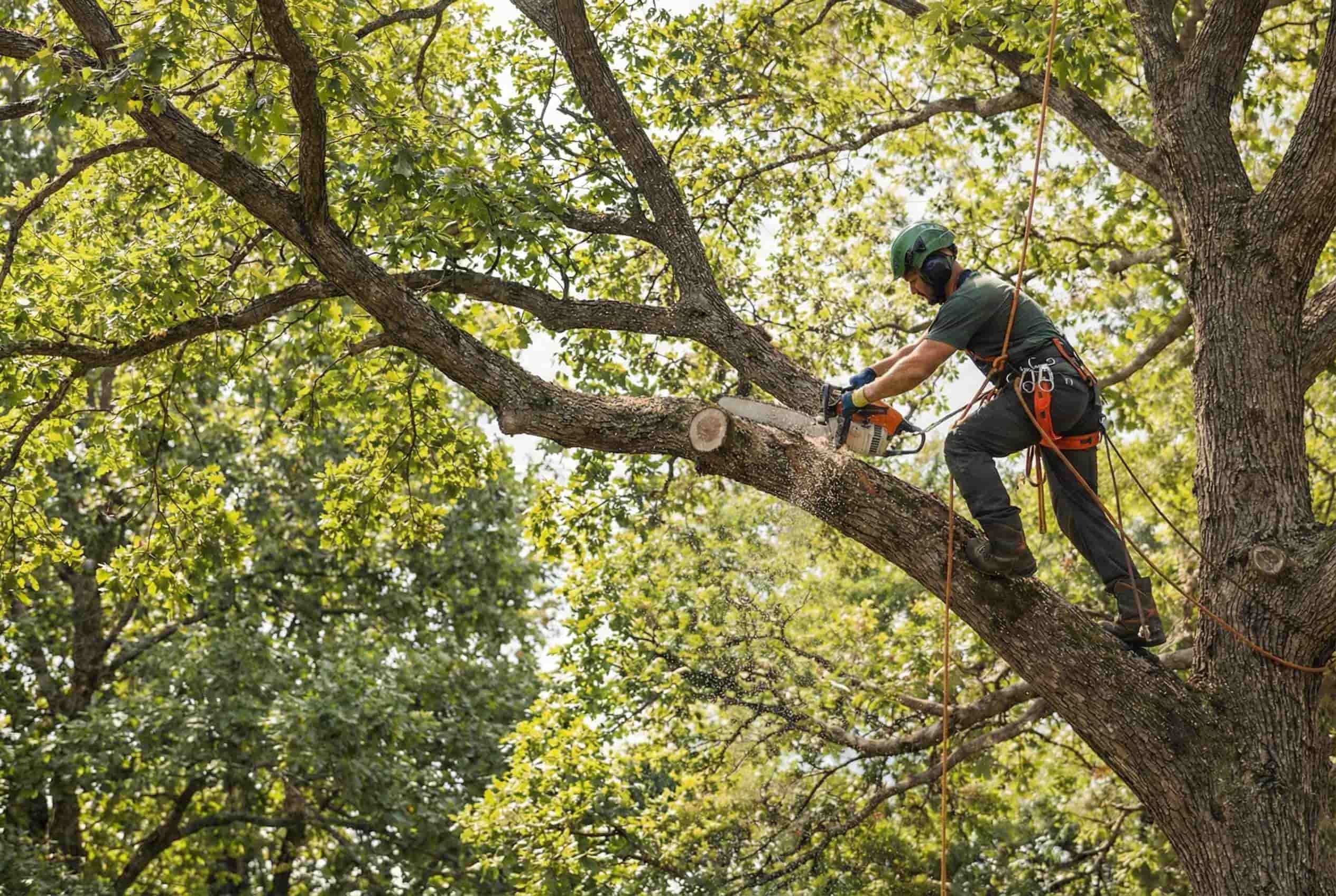
Start with proof of insurance and a written estimate, then judge how straight the crew talks to you. That short list covers most of how to choose a tree service company, though the details are worth walking through. Texas has no state license for general tree trimming or removal. Anyone with a chainsaw and a truck can call himself a tree service, so the checking falls on you.
Proof of Insurance Comes First
Ask for a current certificate of liability insurance, and don’t accept a verbal yes. A real certificate is a document with dates on it, and it should say plainly that tree work is covered. Some policies leave out cutting and climbing, which is the whole job. Check the coverage dates too, because a lapsed policy is the same as no policy at all.
Here’s why this matters more than most homeowners realize. Say an uninsured crew drops a limb through your roof. Or a groundman gets hurt out in your yard. That mess can land on you and your homeowner’s policy. You didn’t swing the saw, but you hired the person who did. A working outfit keeps the certificate handy and won’t act put out when you ask to see it.
Experience is the other half of that check. Twenty years around live oak and pecan teaches you how those trees carry weight and where they split. You learn which limb to take first when a house sits eight feet away. A pecan limb full of green wood is heavier than it looks. Without the reps, a crew guesses, and guessing near a roofline gets expensive fast.
The state hands out no license for this trade. So insurance, years on the saw, and honest answers separate real pros from chainsaw cowboys. Nothing else on earth fills that gap for you.
Get a Real Estimate
A real estimate is written, free, and itemized, and the number doesn’t move once the work starts. It should spell out what comes down and what gets hauled off. It should also say how your yard will look afterward. Vague quotes scribbled on the back of a card have a way of growing.
Ask the questions nobody thinks of until it’s too late. How will they keep the roof and the fence out of harm’s way? Where does the bucket truck park, and can that ground hold the weight? Are your septic lines marked, and will heavy equipment stay off the field? Who rakes up and hauls the chips, and is that in the price or extra?
Two or three quotes will tell you plenty, though the lowest one isn’t automatically the winner. A price well under everybody else usually means something got left out. Maybe hauling the brush, maybe grinding the stump. That gap shows up later as a change order. Compare what each crew promises to do, not just the bottom line.
Good estimators also tell you when you don’t need the work at all. If a tree is healthy and just needs weight pulled off one side, they say so. Nobody honest sells you a removal you don’t need. Read up on when to remove a tree before anybody quotes you. Then you can tell a real hazard from a tree having a rough summer. We keep more plain advice like that in our tree care articles.
Red Flags to Watch
A big cash deposit up front is the loudest warning you’ll get. Real crews cover their own fuel and payroll, then bill when the job is finished. Money handed over before a saw ever runs is money you may never see again.
Storm chasers are the next thing to watch for. After a West Texas wind event tears through Callahan County, out-of-town trucks roll in and start knocking on doors. A few of those outfits are perfectly fine. Plenty are not, and by the time you notice the stump grinding never happened, they’re three counties away. Anybody who shows up uninvited with a magnetic sign on the door deserves more scrutiny, not less.
Pressure is a red flag by itself. “This price is only good today” is a sales tactic, not a schedule. A tree that has stood for sixty years can wait two days while you get a second opinion. Watch for outfits with no local address and a phone number that traces nowhere. Ask to see work they have done around here.
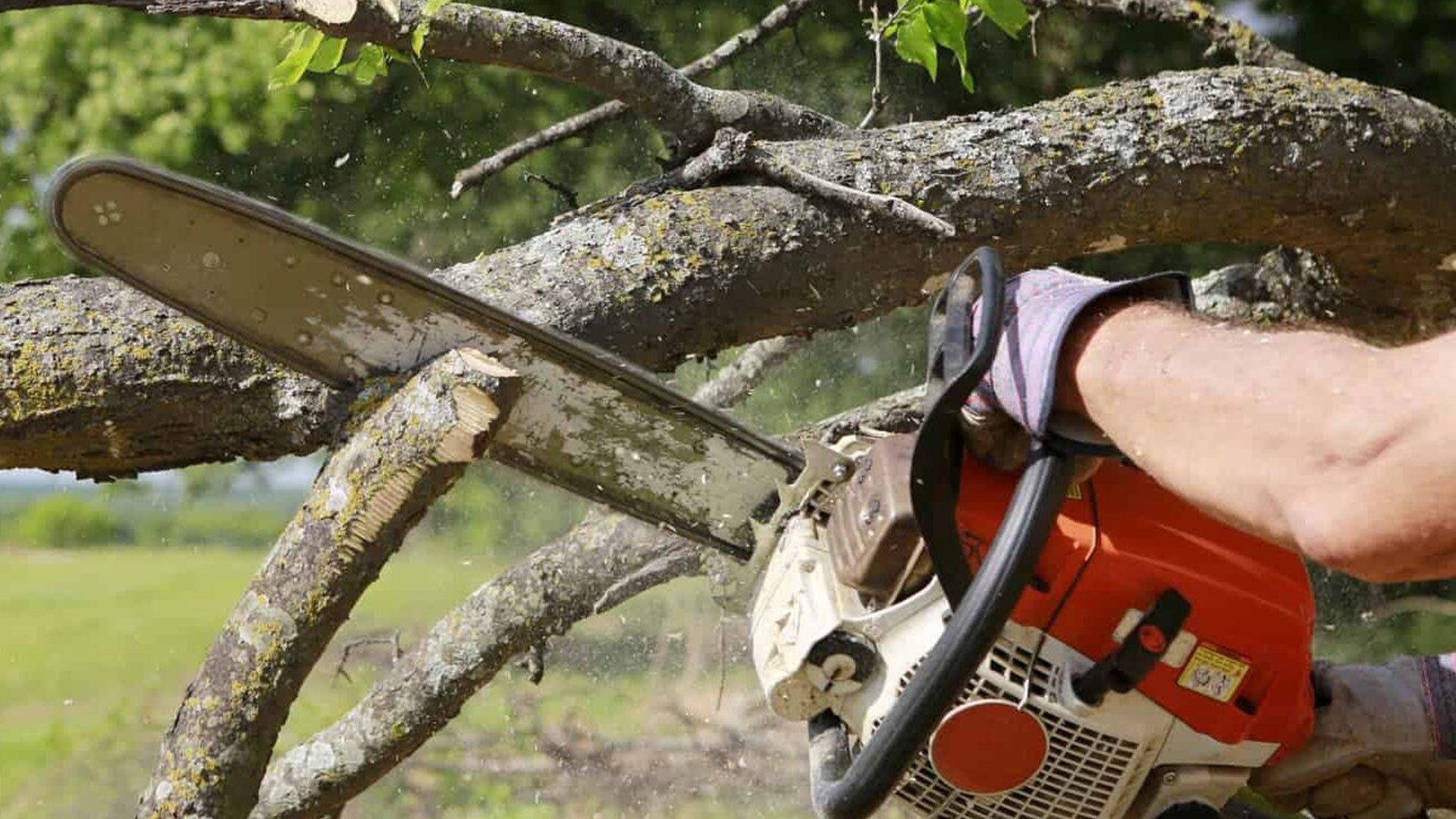
Then there’s topping, which earns its own warning. If someone offers to top your trees, cutting the crown back to stubs, end the conversation there. Topping ruins a tree, plain and simple. It opens big wounds that let rot walk right in. The regrowth comes back thin and weakly attached. You wind up with a bigger hazard than you had before.
Proper trimming follows the tree’s own structure and takes limbs at the right spots.
Why Local Matters
A local crew has to stand behind its work, because you’ll run into each other at the gas station. That’s a stronger guarantee than most paperwork. Rick has run Clyde Tree Service here for three years, after twenty years in tree work. His name rides on every job in town.
Staying local also means knowing the ground. Rural acreage jobs are the ones plenty of crews would rather skip. Long drives, no easy access, fence lines full of dead limbs. Those are the calls we like getting. Someone answers the phone any hour, and estimates are free and usually same day. We don’t call a job finished until you’re happy with how the place looks.
If you’re weighing work at the house, our residential tree service page covers what we handle around Clyde homes. Call or text Rick at 325-225-2680.