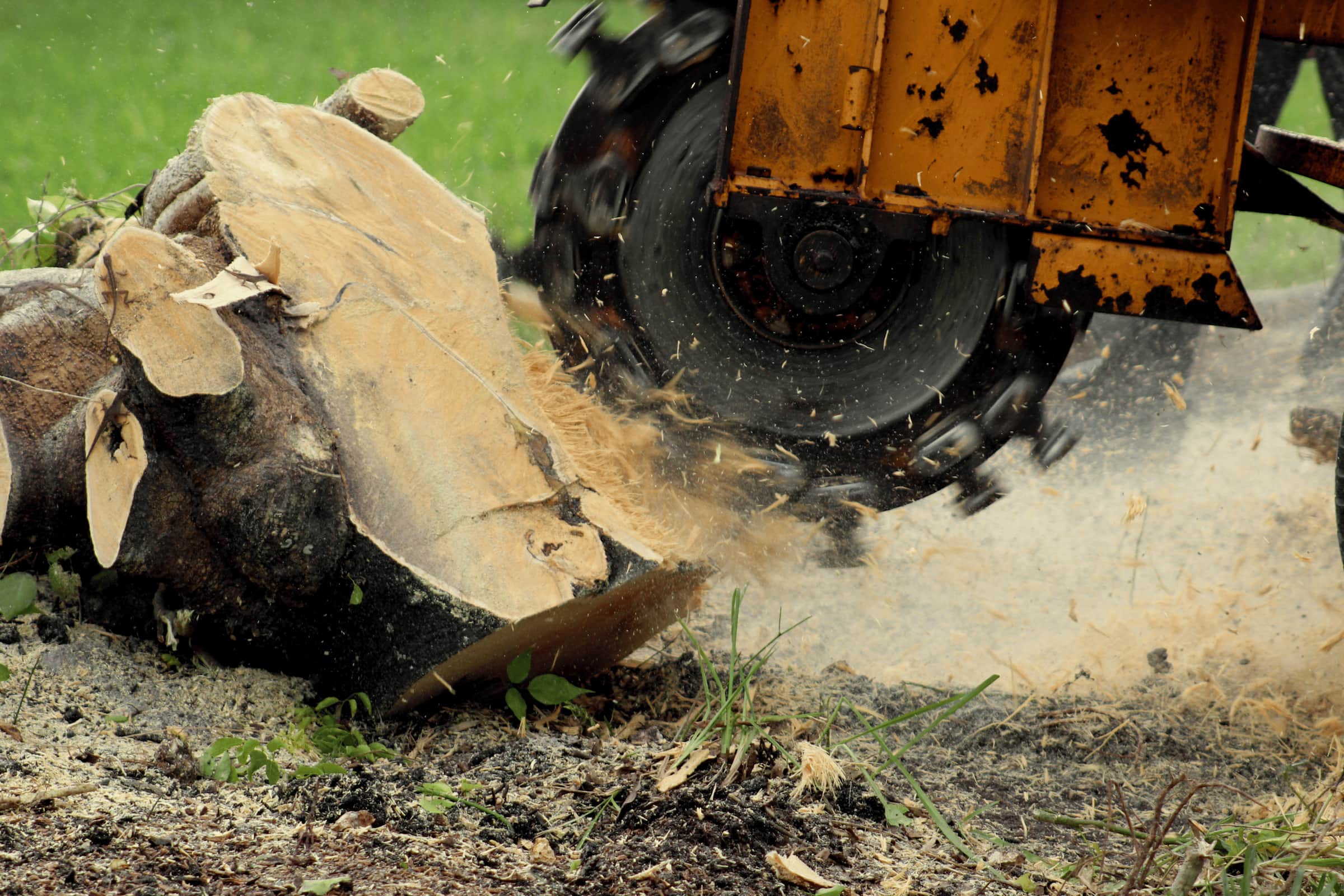
You should remove a tree when it’s mostly dead, hollow in the trunk, or leaning hard at the house. Knowing when to remove a tree isn’t guesswork, it’s reading a few plain signs in the roots, trunk, and canopy. Rick has done tree work for 20 years, and he’s spent the last three serving Clyde. Most folks wait too long, and then a West Texas storm makes the call for them. Here’s what he looks at on Callahan County properties so you can decide before that happens.
Warning Signs
Watch for mushrooms at the base, a hollow trunk, dead limbs up top, and soil lifting on one side. Any one of those means it’s time for a closer look. Two or three together usually mean the tree is already failing, even if it still looks fine from the road.
Mushrooms or shelf fungus at the base point to root rot. The wood down there is breaking apart. A tree with rotten roots goes over in a gust that other trees shrug off. You won’t see that damage, because it’s all underground. What you can see is the fungus, so take it seriously.
Look at the dirt around the base after a hard rain. If the soil is humped up or cracked on one side, the roots are pulling loose. Our heavy clay soil makes the problem worse. Clay swells when it’s wet and shrinks in a drought, and that movement works the root plate loose. The same swelling lifts sidewalks and pushes on foundations. A big live oak or pecan sitting close to the house makes that worse.
The bark tells on a tree as well. Watch for big plates falling off, deep vertical cracks, or a soft spot you can push a screwdriver into. All of that means the wood underneath is dying. A thin canopy counts against a tree too. If half the branches leaf out in spring and the rest stay bare, the tree is losing ground. Dead wood high in the crown is worse than dead wood down low. A lot of the same clues show up in our piece on signs your tree is sick or stressed. It’s a good read before you decide anything.
Check every tree after a big storm. Walk the whole place and look up, slow. Hanging limbs, fresh splits, and a lean that wasn’t there last week all mean it’s time to call somebody out. Sap running down the bark from a wound is another one. Damage that gets ignored in April tends to land on something in July.
Dead vs Dying
A dead tree has no living tissue left, while a dying tree still has green wood. Telling them apart is easy with the scratch test. Take a pocket knife and scrape a little outer bark off a twig. Green underneath means that limb is alive. Brown and dry underneath means that limb is gone.
Test a few spots, low and high, on different sides of the tree. One dead branch is normal on any old live oak. A tree that scratches brown everywhere is finished. It only gets more brittle and harder to handle the longer it stands.
Drought muddies the picture more than folks expect. Post oak sulks for a season after a dry stretch, drops leaves early, and still comes back fine. Pecan and live oak often hang on if the roots are sound. Mesquite and hackberry are tough trees, but they split easy once the heartwood rots. If you’re unsure, give it one growing season and scratch it again. There’s more on reading a stressed tree in our tree care articles.
Safety Risks
A failing tree falls on whatever sits closest, usually a roof, a barn, a fence, or a truck. Wind out of the west doesn’t ask permission. A trunk that’s been quietly rotting for five years can come down in one afternoon. Nobody gets a warning, and the cleanup always costs more than the removal would have.
Never touch a tree that’s on a power line, and don’t let anyone you hire do it either. Call the utility company first and wait. That job isn’t worth your life or your house. The same goes for anything you’d have to climb a ladder to reach with a saw running. Ladders and chainsaws put good people in the hospital every single year around here.
Storm damage always has a paperwork side to it. Photograph everything before you cut, from several angles, with the whole tree in the frame. Get the damage underneath it too, the shingles, the fence panel, whatever it hit. Insurance folks want to see what actually happened. A pile of chipped brush tells them nothing at all, and you can’t put the tree back.
Out on open acreage the math changes some. A dead post oak two hundred yards from anything isn’t an emergency. One hanging over a well head, a pen, or the driveway is a different story. Think about where your family walks and where the cattle stand in the shade all afternoon. Trees fall toward their lean most days, but rot and wind can send them anywhere. We work rural acreage that other crews skip, so being off the pavement is no reason to leave a hazard standing.
When Removal Beats Saving It
Take it down when over half the tree is dead, the trunk is hollow, or it leans at the house. Pruning at that point just buys a little time. A tree that far gone isn’t going to heal. It keeps dropping limbs, and you keep paying somebody to haul them off.
Mesquite and hackberry crowding a fence line usually aren’t worth the trouble either. A shade tree with real history in the yard is a different call, and we’ll take that one seriously. Trees worth keeping have a solid trunk, live wood through most of the canopy, and roots that haven’t shifted. Those pay you back with pruning and a little water through a dry summer.
An honest answer always beats an upsell here. Rick will tell you straight if yours can stay, even when it costs us the job. If it’s time for tree removal, we’ll look at it for free, same day, with a real number before work starts. We’re insured, local, and owner run, someone answers any hour, and every job carries our satisfaction guarantee. Call or text Rick at 325-225-2680.