
Large Tree Removal
Expert Large Tree Removal in Clyde
Rick and his crew know their stuff. They arrived on time and cleaned up so well you would never know they were here. Would recommend.
Clyde
We called 3 different companies and Rick’s quote wasn’t the cheapest, but we made the right choice. Great work, very easy to deal with.
Eula
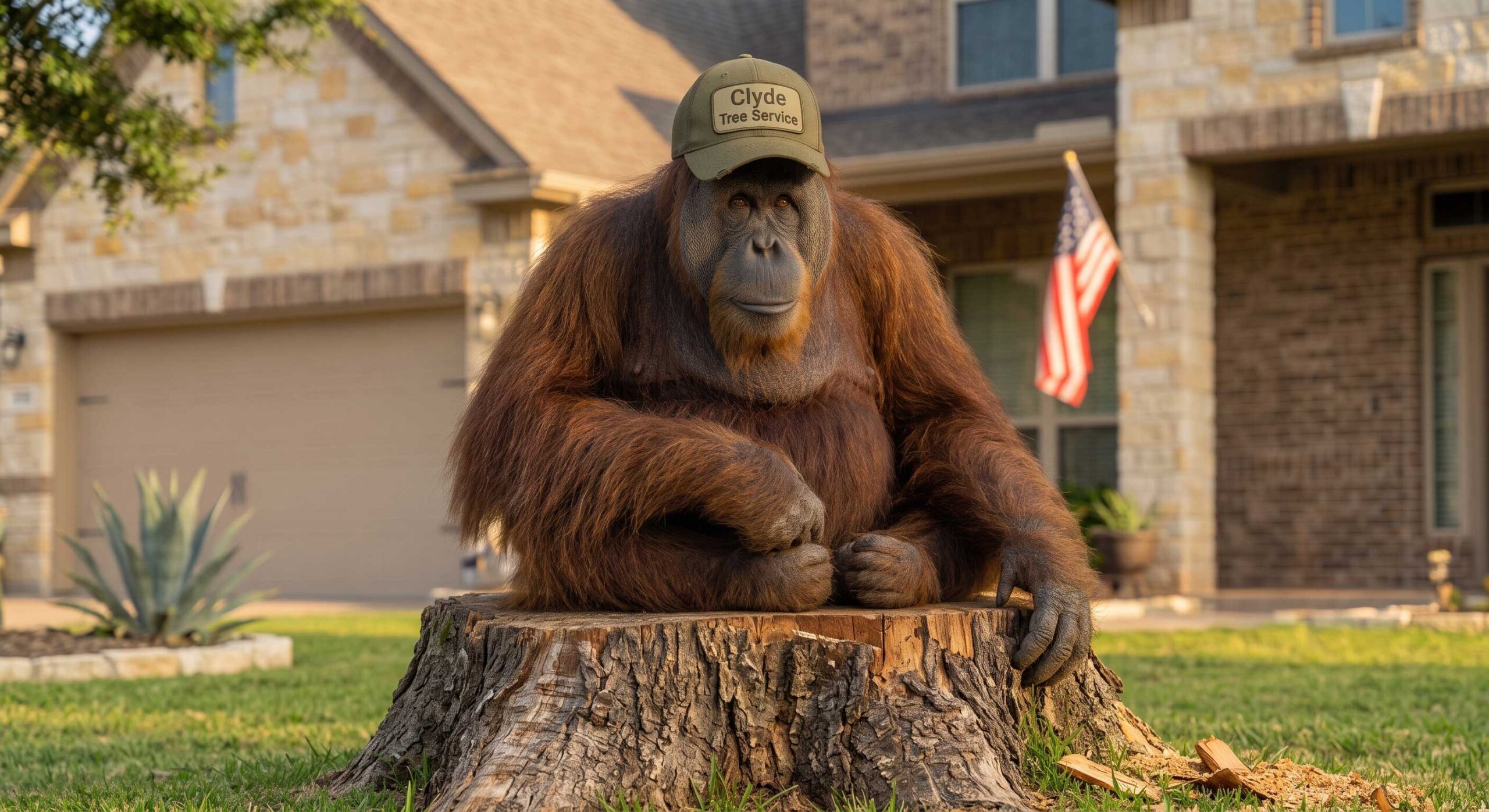
The orangutan doesn’t drive the truck if anyone’s wondering. Great service, did exactly what they promised for the price we agreed to.
Baird
Safe, planned takedowns for big trees in Clyde, TX
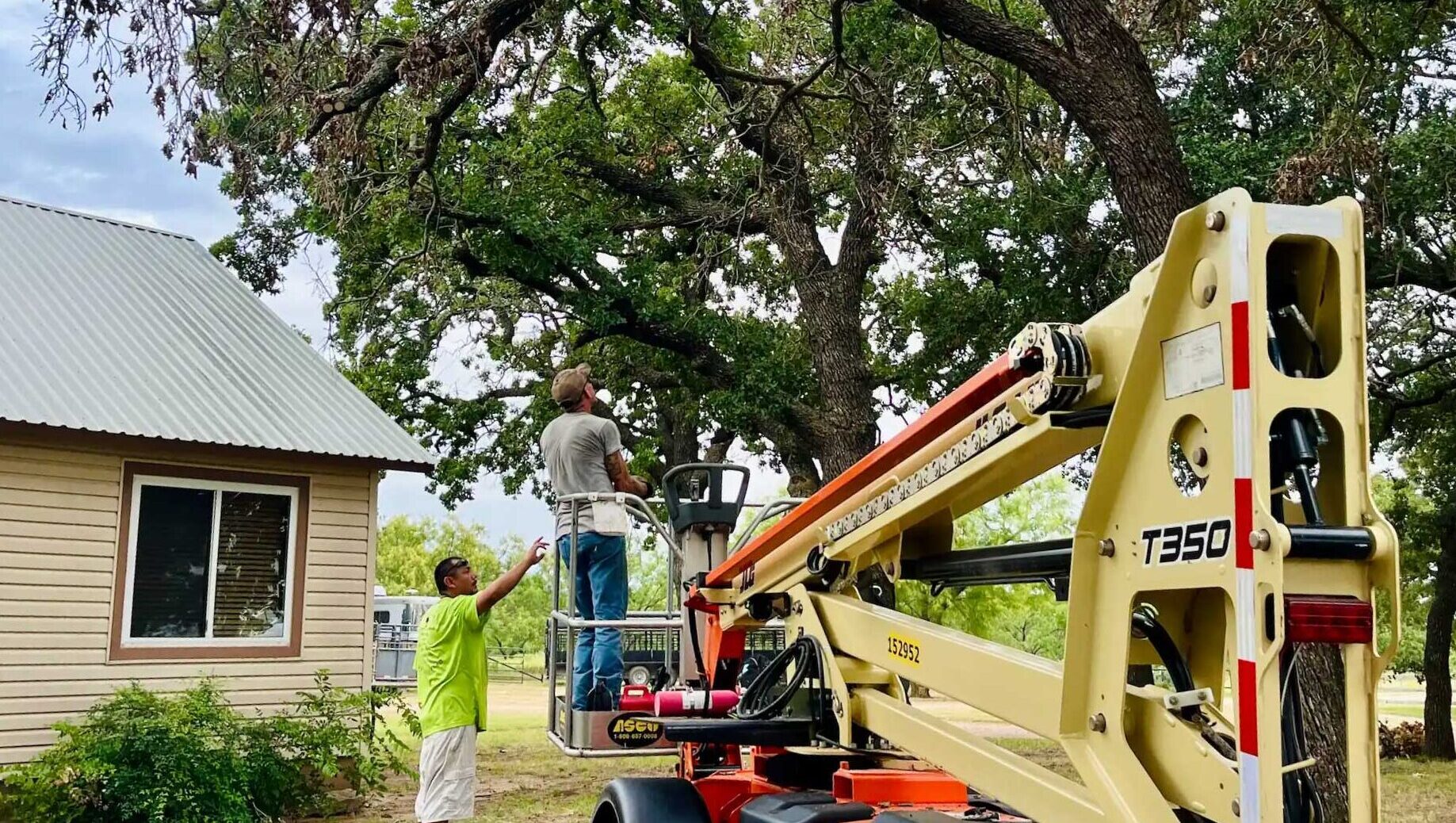
An insured crew and two decades of hands-on experience are what you want standing under a fifty-foot pecan. Rick has 20 years of tree work behind him, plenty of it under trees this size, and our crew has worked this town for the last three years. Large Tree Removal in Clyde is a different job than pulling a sapling out of a flower bed. One mature live oak limb can outweigh the truck parked in your driveway, and gravity doesn’t care how confident anybody is with a saw.
So we plan it. Before a rope goes up, we walk the tree, read its lean, check the root flare, and mark exactly where every piece is going to land. We look hard at what sits underneath too: a roof, a fence, a septic lid, a truck nobody thought to move. Sometimes the plan is a clean drop into open pasture. More often, on a town lot with a house on one side and a fence on the other, it means climbing the tree and lowering it in sections, one rope at a time.
Big trees earn a slower approach, and that’s the whole idea here. We don’t rush a takedown, and we never guess at weight. A tree that spent a long lifetime getting that big can be gone in a single morning, so the only question worth answering is whether it comes down the way we chose or the way it wanted to. Around Clyde, folks call us because the answer is always the first one.
Call or text Rick at 325-225-2680 for a free same-day estimate, and we’ll tell you straight what your tree needs.
“Nobody’s ever regretted the extra ten minutes it took to set a rigging point. We take the big ones down piece by piece.”
Removing Big Trees Safely in Clyde
Weight is what separates a big tree from an ordinary one. A single live oak limb can run several hundred pounds, and a trunk section three feet across weighs more than most trailers ought to carry at once. That one fact changes how the whole job runs. We size every cut so the piece stays under control from the moment it leaves the tree until it settles on the ground.
Nothing free-falls if we can help it, because a piece in free fall picks its own landing spot.
Species matters just as much. Live oak and pecan are dense and heavy for their size, so a limb that looks manageable from the driveway is nothing of the kind once it’s cut. Cottonwood is brittle and splits without warning, which makes it a poor tree to stand under and a worse one to hurry. A drought-stressed tree can be hollow where it looks solid, and Callahan County hands us plenty of those after a dry summer.
Our crew has spent 20 years reading those differences on West Texas trees, and we’d rather take one more cut than one big chance. Wind, drought, and clay soil all leave marks we know how to read before anybody climbs.
Tight-Access Takedowns on Small Lots
On an older Clyde lot, the tree is usually bigger than the space around it. A pecan planted decades ago now stands eight feet off the eave, with a driveway on one side and the neighbor’s fence on the other. There’s no drop zone, so there’s no dropping. A climber goes up, ties in, and every limb comes down on a rope into a landing spot about the size of a parking space. We stage the wood where the truck can reach it, keep the walkway open, and work the tree in a shrinking circle until the trunk is short enough to take in easy pieces.
Out on the FM roads the problem flips around. There’s plenty of room to fell a tree whole, but the ground turns soft after rain, the gate is narrow, and the nearest thing worth protecting might be a fence line or a water trough. We check access and turning room before the truck ever leaves our yard on FM 603. A gate that won’t pass a chipper, low limbs over a caliche drive, a soft spot in the bar ditch: those are all things we’d rather find at the estimate than on the morning of the job. Sometimes the fastest and safest route really is a clean directional fell with a chipper working right beside it.
Crane Work and Rigging on Heavy Trunks
Not every big tree needs a crane, and we won’t sell you one you don’t need. What matters is matching the method to the tree, the ground under it, and whatever is parked or planted nearby. A crane earns its keep when a piece is too heavy to lower on a rope, or when there’s simply nowhere underneath to swing it. Plenty of the time a good climber, a solid rigging point, and a groundman who knows the rope get the same result for less money.
On a heavy takedown the plan gets built around control, so every piece has a rope, a route, and a landing spot picked out before a saw ever starts. The crew talks the order of cuts through on the ground first, and nobody changes it halfway up without saying so out loud.
Here’s what we bring to a heavy takedown:
Protecting Your Roof, Yard, and Fence
Your property gets planned for the same way the tree does. Before any climbing, the crew walks the yard and marks what has to survive the day: sprinkler heads, flower beds, a septic lid, the corner of a shed. Equipment paths get set away from all of it, and plywood or mats go down wherever a truck has to cross grass. On tight lots we’ll pull a fence panel and reset it rather than drag brush across it, and we ask you first.
Roof clearance is its own conversation. Limbs hanging over shingles come off in small pieces with a rigging line on each one, because a limb that swings is a limb that costs somebody a roof. Where a heavy overhang has been rubbing the shingles for years, we’ll show you what’s underneath once the weight is off, since that’s usually when a homeowner finds out about a soft spot.
Once the tree is down, the wood leaves with us unless you want the rounds for firewood. Brush gets chipped, the ground gets raked, and we can bring the stump grinder through the same day so you’re not looking at a knee-high reminder all summer. Grindings fill the hole, and you can sod or plant right over the spot. It’s the same standard we hold on every tree removal job, and if something isn’t right when we pull out, we come back.
Free Estimates on Big Tree Takedowns
Estimates are free, same-day when you catch us early, and they cost you nothing but a walk around your yard. We’ll look at the tree, tell you what it will take, and say so plainly if the tree is healthier than you feared. You’ll hear what drives the number too, whether that’s the reach, the rigging, the haul-off, or the stump, so the price isn’t a mystery figure on a scrap of paper.
Someone answers any hour, so a heavy limb over the bedroom at eleven at night doesn’t have to wait until morning. The crew is insured before a boot hits your driveway, and we don’t call a job finished until you’re happy with how the place looks. Call or text Rick at 325-225-2680, or send us a note on our tree service contractor page.
Share
Did you know?
Tree work sends tens of thousands of people to the ER every year, and it’s rarely the pros; it’s usually a homeowner up a ladder with a chainsaw and gravity against him. A big limb can outweigh a grown man before it ever lands.
Large Tree Removal Questions in Clyde
What Homeowners Ask Us
Big-tree questions come up on nearly every estimate we walk. Here’s what folks around Clyde ask Rick most often before a large takedown, answered straight.
When does a large tree in Clyde need a crane instead of a climber?
A crane comes in when a piece is too heavy or too awkward to lower on a rope, or when there’s nowhere safe underneath to swing it. Around Clyde that usually means a big live oak leaning over a roof, or a trunk wedged between a house and a fence. Most jobs don’t need one. We’ll tell you at the estimate whether yours does, and why.
What is sectional felling, and why use it on a mature pecan?
Sectional felling means we take the tree apart from the top down instead of dropping it whole. A climber ties in, cuts a limb, and the ground crew lowers it under control on a rigging line. Trunk sections come off last, a few feet at a time. On a mature pecan with a house nearby, it’s the only way to keep every piece landing where we chose.
Can you remove a big tree from a Clyde backyard with no gate access?
Yes, and a backyard with no gate is a regular job for us in Clyde. If a truck can’t get in, the tree comes out through the yard by hand and rope, cut small enough for two people to carry. We may pull a fence panel and reset it, with your say-so first. Tight access takes longer, so we price it honestly up front instead of surprising you.
How do you keep a heavy limb from swinging into my roof?
Nothing swings if the limb never goes free. We tie the limb off above the cut, take its weight on a rigging line running through a block, and a groundman lets it down slowly with friction on the rope. Cuts get sized so each piece stays light enough to control. Where the roof sits right underneath, we shrink the pieces further and simply take more of them.
Will your equipment tear up my flower beds and sprinkler lines?
We plan around them. The crew walks the yard first and notes beds, sprinkler heads, septic lids, and soft ground, then sets the drop zone and the equipment path away from all of it. Plywood or mats spread the weight where a truck has to cross grass. Heavy work can still leave a mark, and we say so before we start. We’re insured either way.
Can a stump that wide really be ground out here in Clyde?
Yes. A wide stump takes a bigger grinder, more passes, and more time, but it comes out. In Clyde we usually take the grindings a few inches below grade so you can lay sod or plant over the spot. Old pecan and hackberry stumps have a broad root flare that adds to the work. We quote grinding separately, so you can decide after the tree is down.
What happens to all the trunk wood from a big tree?
We haul it off unless you want it. Trunk sections from a big tree are heavy, so the crew cuts them into rounds we can move and loads them out along with the brush. Plenty of folks ask us to leave those rounds stacked for firewood, or to chip the limbs into a mulch pile for the beds. Tell the crew that morning and we’ll set it aside.
How long does taking down one large tree usually take?
Most single large trees come down in one day. A straightforward tree with room to drop can be finished in a morning. A tall one over a roof, taken in small pieces with rigging on every cut, can run a full day or into a second once cleanup and stump grinding are added. We give you a realistic window at the estimate rather than a hopeful one.
Quick Links
Services
Contact Info
Please Review Us
We sure could use your help letting Clyde know how good we are.

Copyright © 2026. All rights reserved.